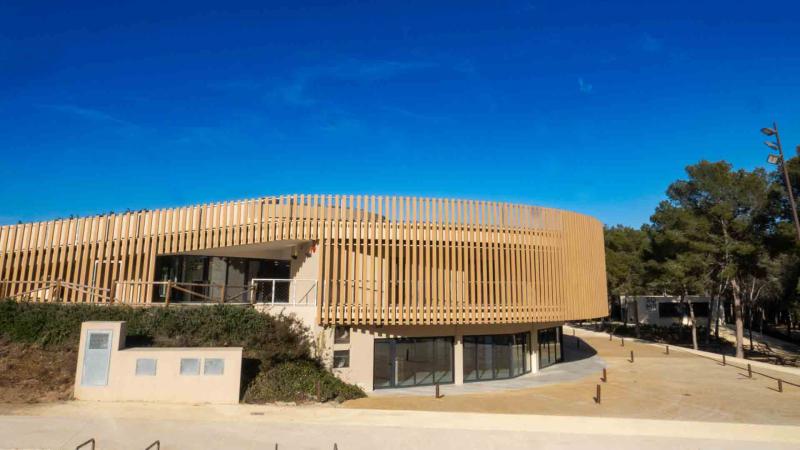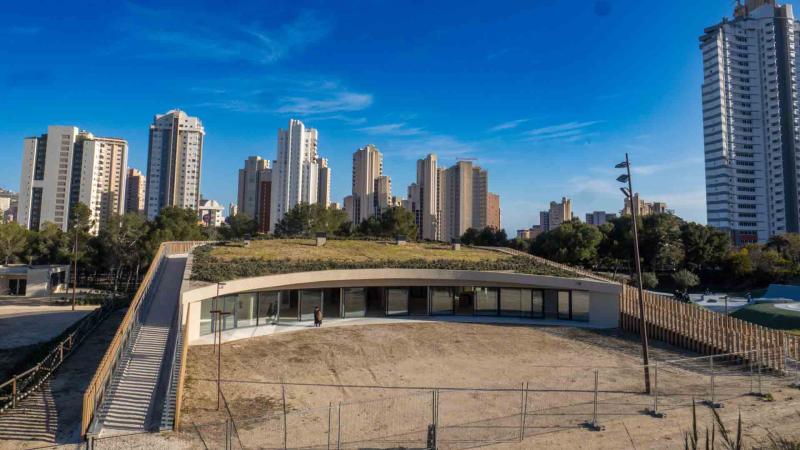
The presentation of the project for the future center, on the 360th anniversary of the Riego Mayor, culminates the commemorative events of Water Week
The Séquia Mare Interpretation Centre will highlight the historical relationship of water with Benidorm
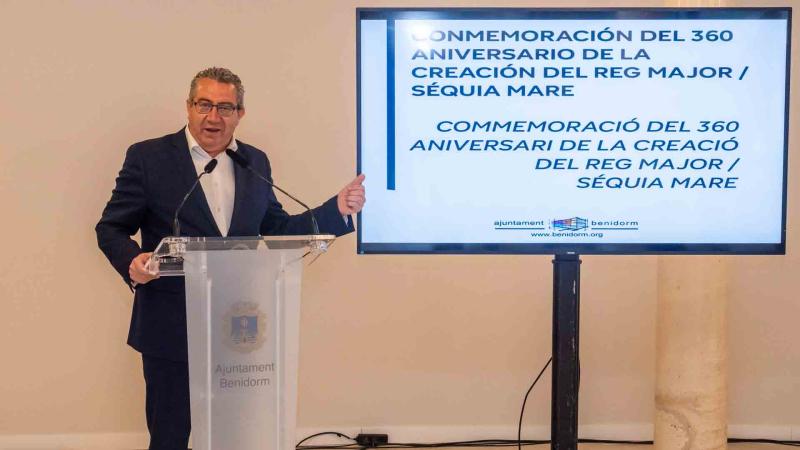
Toni Pérez: The enclave that Fajardo de Mendoza created "would be impossible without water"
With the presentation yesterday afternoon of the Séquia Mare Interpretation Centre, the commemorative events for Water Week, organised by the City Council and the company managing the Water Cycle, concluded in Benidorm. The event coincided with the 360th anniversary of the creation of the main irrigation canal (Riego Mayor) by Beatriu Fajardo de Mendoza in 1666.
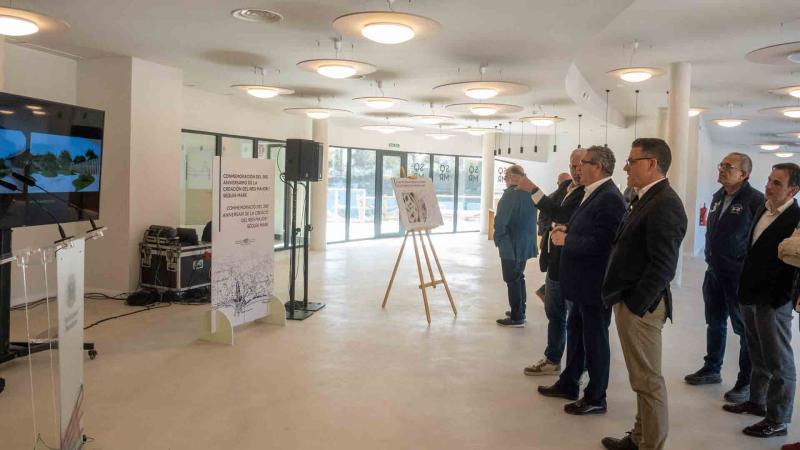
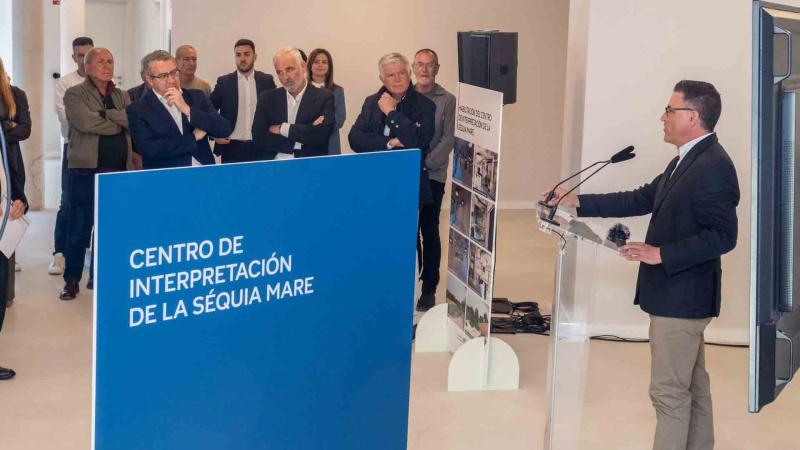
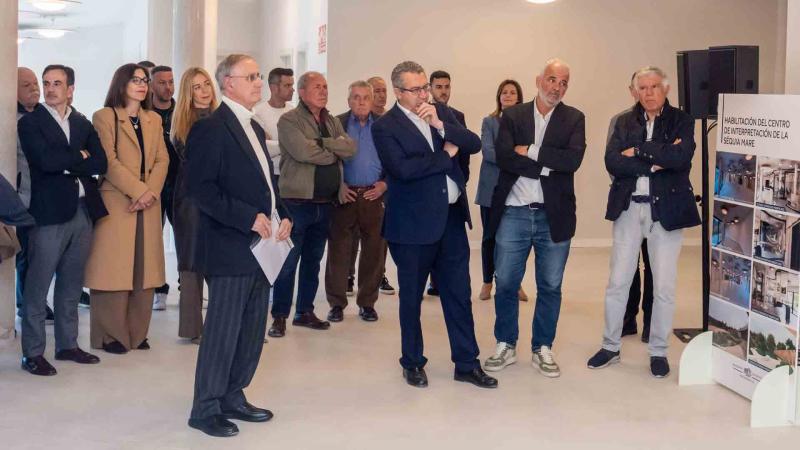
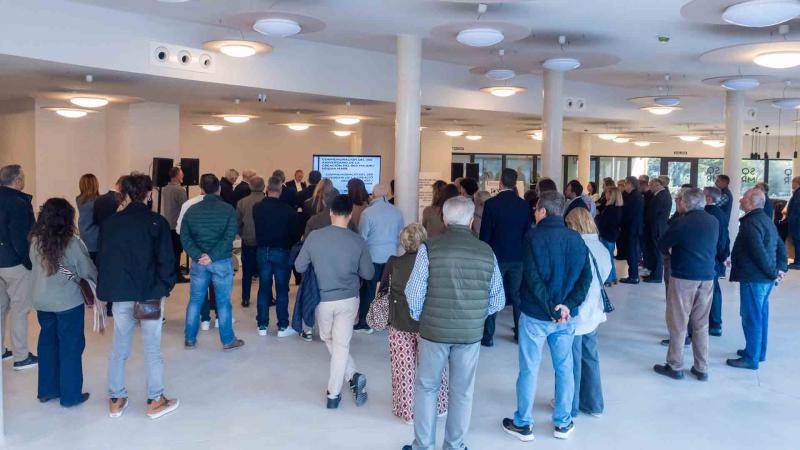
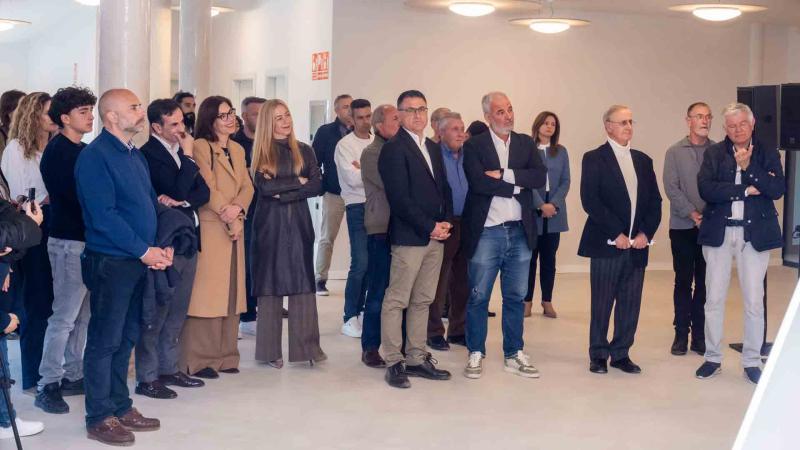
Around one hundred people gathered at the new facilities to learn firsthand about the Interpretation Centre and the important role it will play in promoting the city as a model of sustainability. Among those present were the mayor, Toni Pérez, and the councillor for the Water Cycle and regional deputy, José Ramón González de Zárate, along with other members of the council, fellow deputy Manuel Pérez Fenoll, and representatives from business, social, and cultural associations, as well as entities traditionally linked to the city's water resources.
The Councillor for the Water Cycle and regional deputy, José Ramón González de Zárate, emphasised the importance of water, a “fundamental element” for Benidorm throughout its history, and its further recognition with the 2016 reclamation of the Séquia Mare (Main Irrigation Canal) on what was then “a spoil heap.” He also highlighted the first step taken in this regard with “the creation of a mural” and the naming of the adjacent roundabout after it.
“Now we have a park for everyone to enjoy,” he said, “and now we are taking another step” with the Interpretation Centre, which “will become a reality this year.”
Following the councillor, Professor and historian Francisco Amillo addressed the attendees, commemorating the 360th anniversary of the creation of the Riego Mayor (Main Irrigation System), which brought water to Benidorm, “on which the survival of a town that lacked a river, like Altea or Vila Joiosa, depended.”
Amillo pointed out that, thanks to water, “the Séquia Mare allowed for significant population growth” and its subsequent development. The historian specified that “initially,” the system could “receive about 16 litres per second” of water, which enabled “self-sufficient irrigation.”
With the commissioning of the Lower Algar Canal in 1950, “more than 800 litres” per second were reached, allowing for “intensive citrus cultivation.” In 1984, with the introduction of treated wastewater, “the Séquia Mare became obsolete” and, therefore, remained practically forgotten until 2016.
Javier Ruiz, representative of Síntesis, the company that carried out the Interpretation Centre project, after showing an audiovisual presentation that highlighted the facility's wide range of possibilities, indicated that it will be used for "talks and school visits" in a place that "was once a landfill and is now a large park." Ruiz emphasised that Benidorm, "as a city, is an example of sustainability," and that "this is what we wanted to reflect in this centre."
The building is made up of "movable walls and panels," Ruiz explained. This, along with its great versatility, will allow children from Benidorm and other visiting towns to learn about "the history of what we were and what we want to be in the future," all in an interactive way where "schoolchildren can touch, learn, and discover."
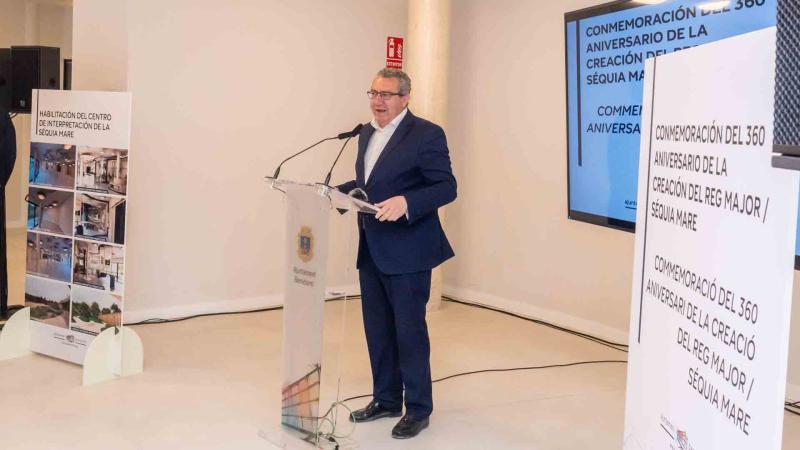
For his part, Toni Pérez, the last to speak, congratulated González de Zárate for "having successfully led what was both a wish and a dream." An outstanding debt “of this leading destination, of this city, to its past, which is also the present.” The mayor also highlighted the Taula del Bon Profit, a key entity in the revitalisation of the Séquia Mare (Main Irrigation Canal).
The mayor recalled how, as a child, he explored branches of the Sequia Mare “on Tomás Ortuño Street or Jupiter Street,” right in the heart of Benidorm, and advocated for keeping alive the memory of that “April 1, 1666,” with the Riego Mayor (Main Irrigation Project), and “of April 8, with the Charter of Settlement granted by Beatriu Fajardo de Mendoza,” for which the Interpretation Center will be a key element. A “centre that was conceived as an educational space for all audiences, designed with great care.”
“The essential thing in this land was that those who held the water rights gave them to the city,” Toni Pérez emphasised. A Benidorm that is “a model of integrated water cycle management.” Let no one think that “nature always gave us water here, that it fell from the sky.” Recognising the effort and work done “is the great task of this center” because the Benidorm enclave that Fajardo de Mendoza created “was impossible without water.”