Urban growth means the Consortium must resort to desalination to guarantee supply
Benidorm is making progress in the processing of the desalination plant and is asking the Ministry to include another one in the 2028-2033 Hydrological Plan
The Water Authority agrees with the Society for Digital Transformation Projects (SPTD) on the transfer of the submarine outfall and the pumping station of Paseo de Tamarindos
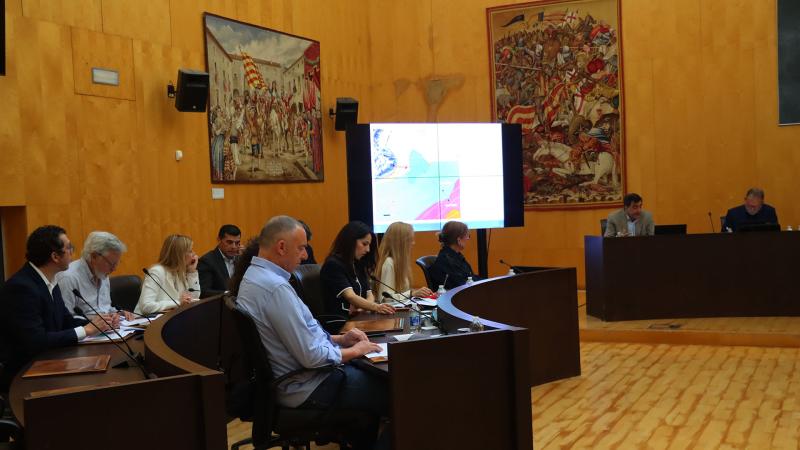
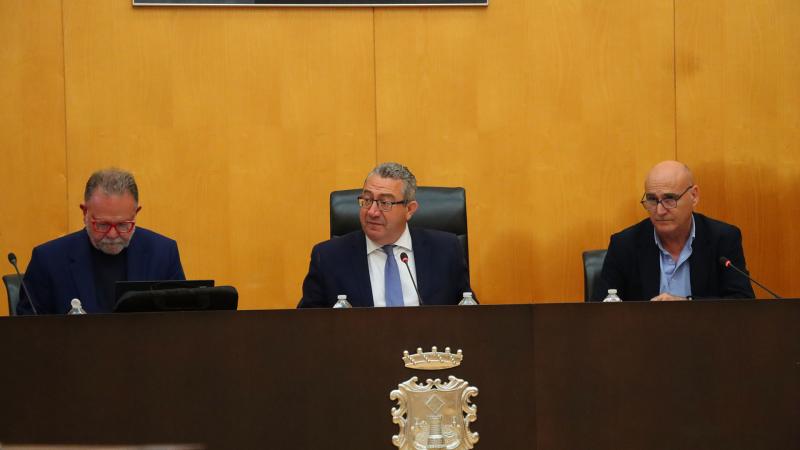
The process to establish a desalination plant in Benidorm continues to move forward with significant progress. At today's meeting of the Marina Baixa Water Consortium, chaired by Mayor Toni Pérez, an agreement was reached with the Society for Digital Transformation Projects (SPTD) for the transfer of the submarine outfall and seawater pumping station on the Tamarindos Promenade to the Consortium.
These infrastructures were intended to draw water for the desalination plant planned within the Terra Mítica Special Urban Development Plan (PEDUI), which was ultimately not built. Now, to ensure better and more widespread use of both the pipelines and the pumping station, the transfer to the Consortium has been agreed upon, with the Consortium only paying €48,888 in VAT.
Thus, these existing infrastructures will be utilised and put to use with the future plant, the development of which is still underway after the project design contract was awarded, and this was reported at the last meeting of the Water Consortium held last March. The plan is for this desalination plant, which will have an approximate budget of 25 million euros and will be financed by the regional, provincial, and Consortium governments, to be operational by 2028 and generate approximately six cubic hectometers of water for the supply.
Furthermore, at today's meeting of the General Assembly of the Water Consortium, the agreement reached with the Ministry for Ecological Transition and the Demographic Challenge for the inclusion of a new desalination plant in the Júcar River Basin Management Plan 2028-2033 was reported. At that point, Jaime Berenguer, technical director of the Consortium, explained that two meetings were held at the Ministry “with the aim of including the construction of a new desalination plant in the next Hydrological Plan so that it would be a reality by 2034.”
According to Berenguer, the Director General herself “expressed her agreement” with the proposal, which, according to the technical director, “will cover the planned urban developments and ensure the future of population growth in the medium and long term.” This future plant would have a capacity of 18 cubic hectometers, although in its initial phase, it would operate at a capacity of six cubic hectometers.
On the other hand, the Consortium has insisted on the need to continue demanding new investments for the Marina Baixa region, given the lack of them over the last 25 years. Meanwhile, the Taibilla System has completed four desalination plants, in addition to replacing asbestos cement pipelines dating back to the 1980s. In this regard, Berenguer pointed out that the current Amadorio-Benidorm pipeline is awaiting renovation, along with other infrastructure projects. The Júcar River Basin Authority (CHJ) has agreed to hold a meeting to discuss the matter.