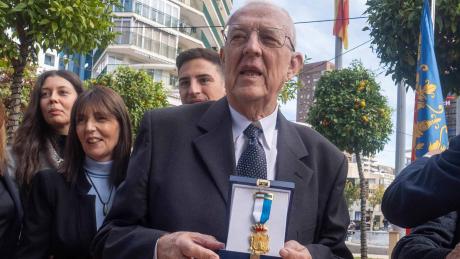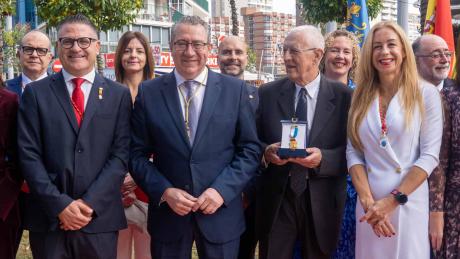

The City Council presents him with its Corporate Medal at the commemorative event for the 47th anniversary of the Spanish Constitution
Benidorm acknowledges the key role of former mayor Rafael Ferrer Meliá during the 'water crisis' that threatened the city in the late 1970s
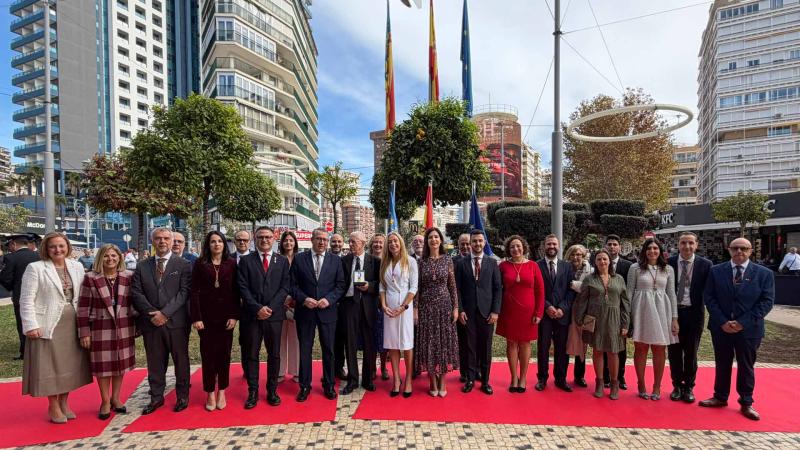
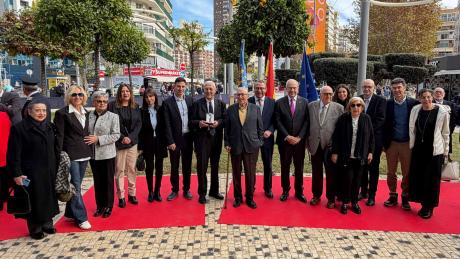
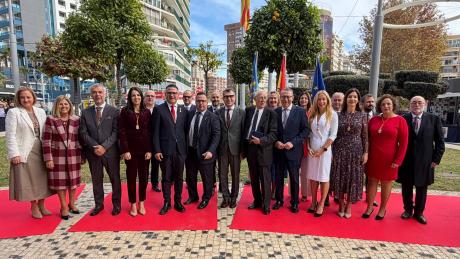
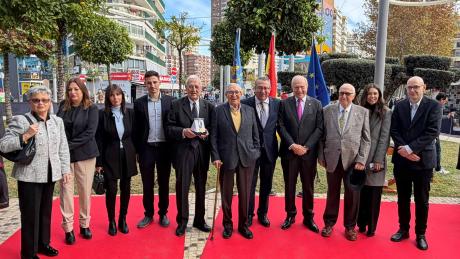
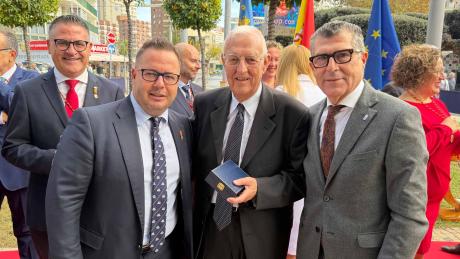
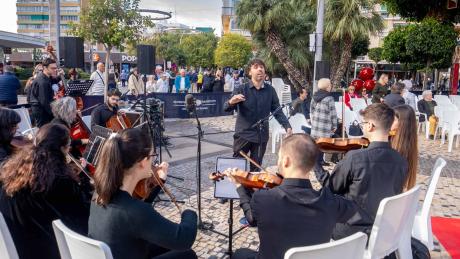
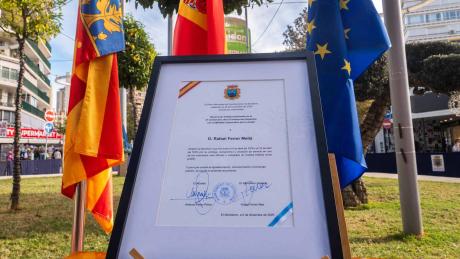
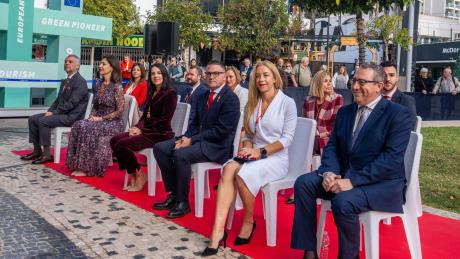
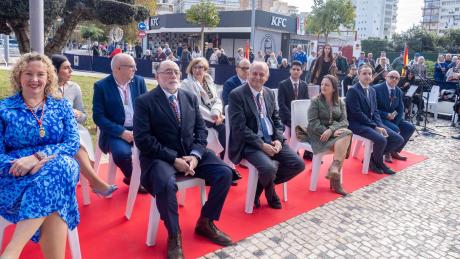
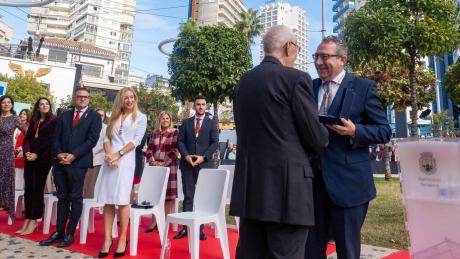
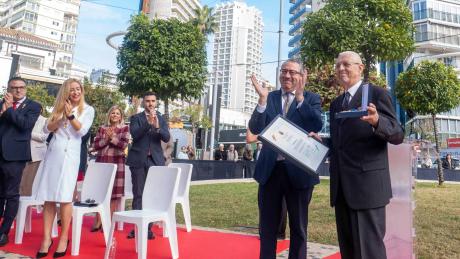
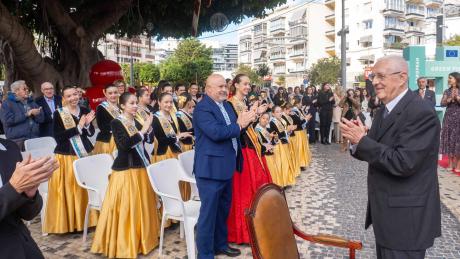
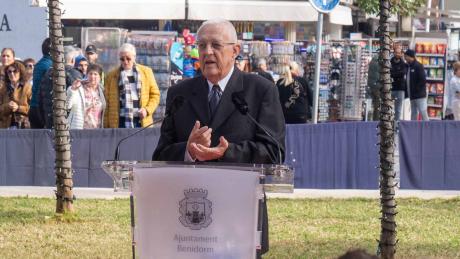
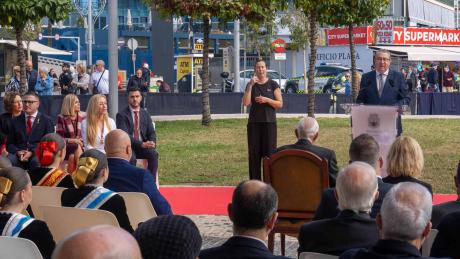
On the 47th anniversary of the Spanish Constitution, Benidorm today recognised the key role played by former mayor Rafael Ferrer Meliá during the water crisis that jeopardised the city and its tourism industry in the late 1970s. At a ceremony held in Plaza de la Hispanidad, Rafael Ferrer Meliá was awarded the Benidorm Corporate Medal from Mayor Toni Pérez, in the presence of family, friends, and a large representation of the municipal council and Benidorm's civil society.
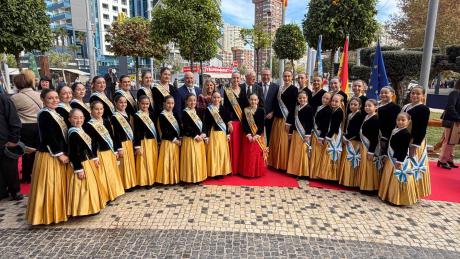
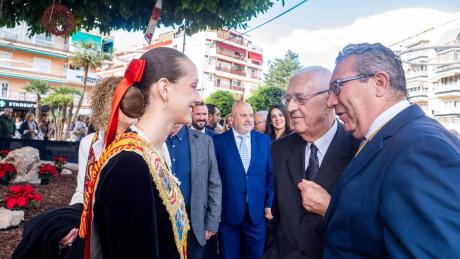
Among those in attendance were Senator Agustín Almodóbar; regional deputies José Ramón González de Zárate and Manuel Pérez Fenoll; and representatives of the State Security Forces, associations, and civic organisations. Among them were the queens of the 2025 Patron Saint Festival, Paula Pascual Sánchez and Aitana Pérez Gutiérrez.
Regarding the honoree, Toni Pérez emphasised that he was “a man who experienced firsthand, with the intensity befitting a citizen and his position, those moments we celebrate today,” and who led the City Council between April 4, 1978, and April 16, 1979. It was “a critical time” for Benidorm due to the devastation caused by the drought that had begun years earlier. However, “nothing discouraged him, and he resolved the issues with sound judgment and dedication.”
In broad terms, he recounted that “during his term as mayor, he faced the ‘Water Crisis,’ oversaw two democratic processes—the Constitution Referendum and the first municipal elections—and planned a significant number of projects that were implemented in subsequent years by his successors,” such as the city’s first secondary school, several primary schools, the first municipal nursery school, the fire station, and the wastewater treatment plant (WWTP).
“Rafael Ferrer Meliá will always be remembered for successfully tackling the water crisis, even confronting a government minister,” the same minister who “proposed closing the city to tourism and diverting tourists to other destinations.” Toni Pérez emphasised that his “dedication to public service” and “commitment” to Benidorm, demonstrated during his time as mayor, deserve “this recognition, our tribute, our appreciation, and our applause.”
After receiving the City Council Medal, Rafael Ferrer Meliá expressed his gratitude for this tribute and recognition “to the City Council, the people of Benidorm, and the municipal staff who supported me” during the most difficult moments of the water crisis. The honoree stated that receiving this award represents "one of my greatest honours," as well as "serving my community." He also paid heartfelt tribute to municipal officials and technicians who are no longer with us, especially José Ramón García Antón, and to "all those political parties that collaborated perfectly and without distinction" for the good of Benidorm.
"I want to thank all the people and everyone who behaved as they should, fully supporting their community in defending its interests, and also the people of the Marina Baixa region, because without their collaboration we could not have achieved everything we did," he affirmed.
Institutional speech
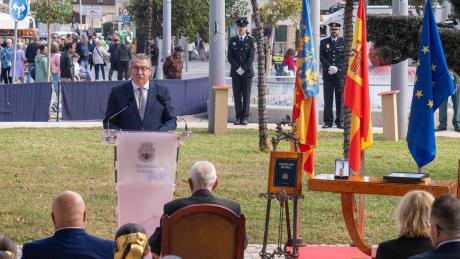
In addition to paying tribute to and recognizing Rafael Ferrer Meliá, Toni Pérez, in his speech, urged a return to the spirit of dialogue and reconciliation that prevailed during the Transition and the drafting of the Spanish Constitution, the fundamental law that "is celebrating its 47th anniversary today, providing Spaniards with a framework for coexistence and pluralistic development based on human dignity."
The mayor recalled that the 1978 Constitution "culminated the Transition and ushered in the constitutional and democratic era in which we find ourselves," which "constitutes the longest period of peace in the history of Spain." He also highlighted that, in addition to the 47th anniversary of the Constitution, this year also marks "50 years of the Monarchy in Spain."
He then emphasised that "if any date is worthy of celebration in 2025," it is, "without a doubt," November 22nd: "the fiftieth anniversary of the restoration of the Monarchy," which, with the promulgation and the ratification of the Constitution, placed sovereignty in “the hands of the Spanish people.”
At this point, Toni Pérez highlighted the figure of the now King Emeritus. “It was he who positioned himself in favour of the approval of the Political Reform Law, which paved the way for the elimination of the previous political structures,” thus giving way to democracy, he explained, adding that “with the Monarchy came the Amnesty Decrees to achieve national reconciliation and the establishment of internal peace.”
As the mayor emphasized, “the Monarchy called for the consolidation of democracy, for the permanent elimination of the historical causes of fratricidal conflict, and for the construction of a Spain that was politically harmonious, socially just, and culturally dynamic.” The establishment of the Monarchy, he elaborated, “did not signify the triumph of any ideology, but rather the success of the Spanish people who proclaimed their yearning for a future of peace and freedom.”
“Just a few days ago, our King, Recalling this anniversary, he noted that: “In times when disagreement is expressed with tension, looking back to that period can be useful; not to idealize it, but to remember its method: words versus shouting, respect versus contempt, the search for agreement versus imposition,” Pérez recalled, also highlighting the role played by José Pedro Pérez Llorca, son of José Pérez Llorca from Benidorm, as a father of the Constitution, and conveying support and gratitude to the Armed Forces and State Security Forces; to judges, magistrates and prosecutors; and “to all those who, day after day, work to win the future in peace under the protection of the Constitution.”