Benidorm presents new tool to monitor the number of people in the city at any given time and improve resource management

The BeCiTi hub hosts the launch of the Digital Twin, a tool that enables water, cleaning, security and maintenance services to be planned more accurately based on the city’s fluctuating population.
Mayor Toni Pérez says the new platform “will further facilitate the integration of tourism activity with residents’ quality of life and the city’s overall well-being”
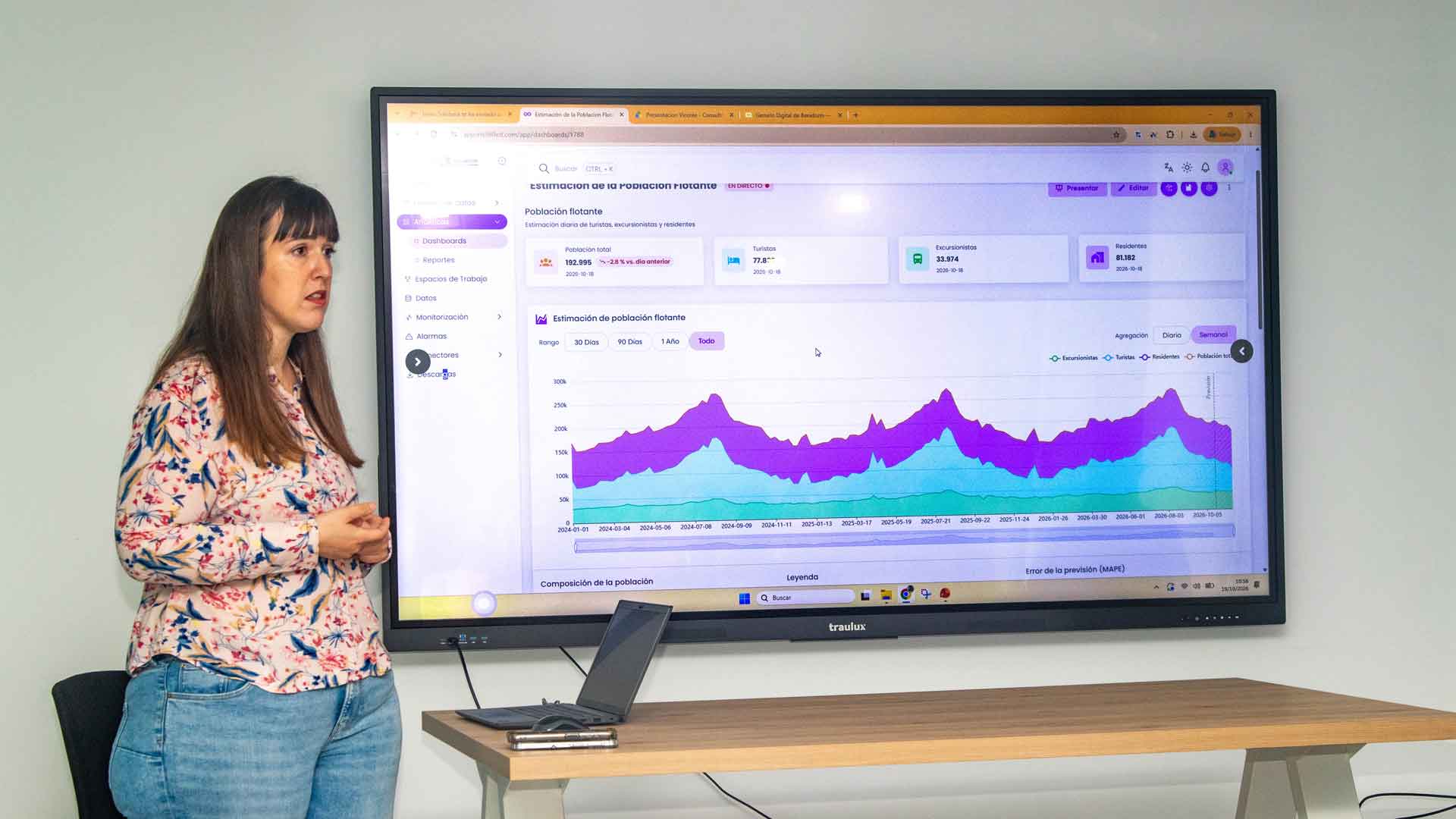
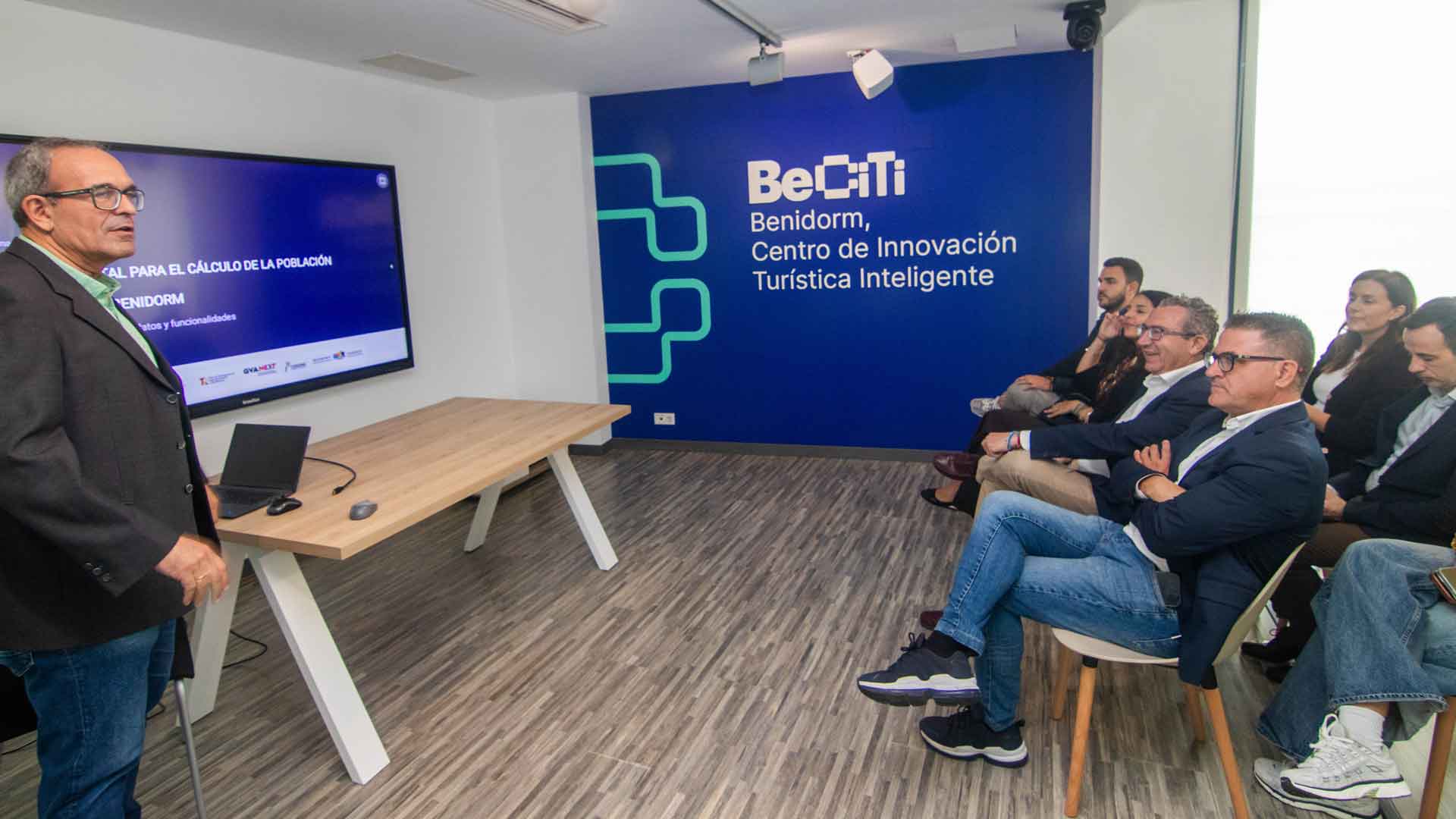
Knowing how many people are in the city at any given time makes it possible to plan and manage resources more effectively. Benidorm City Council’s innovation hub, BeCiTi, hosted the presentation on Monday of a new data intelligence and management tool developed by the local authority. The platform will make it possible to monitor population flows and plan public services such as water supply, street cleaning, security and urban maintenance more accurately.
The tool, called the ‘Digital Twin for Calculating and Monitoring Benidorm’s Floating Population’, has been developed as part of the ‘Verde Benidorm’ Sustainable Tourism Destination Plan. The project is funded by the European Union’s NextGenerationEU programme under the Recovery, Transformation and Resilience Plan, with a budget of €140,000.
The presentation was attended by the city’s mayor, Toni Pérez; Councillor for Innovation and European Funds, Aida García Mayor; other members of the local council; and representatives of concession-holding companies and tourism service providers. The new tool operates through the ‘iris360’ data intelligence platform, developed by Libelium, and has been up and running since the end of June.
The mayor highlighted that this digital twin “answers the big question we have continually been asking ourselves in Benidorm: how many people are in the city right now? How many were here yesterday? How many will come tomorrow?”
He explained that, while this figure “can be easily estimated in any other city by using registered population figures and hotel capacity, in Benidorm it is extremely complex”. This is because the city is home not only to registered residents, but also to people who live there all year round without being officially registered, tourists who stay at least one night in licensed accommodation, and visitors who spend a certain number of hours in the city for leisure or work, using its services and enjoying its attractions without staying overnight.
The new platform enables the city to cross-reference different types of anonymised data, including water and electricity consumption, waste generation, working calendars, events, weather conditions, mobile phone SIM card data, hotel occupancy, mobility patterns and other data sources, such as those provided by the Smart Playas platform.
By combining this information, the system can generate scenarios showing expected resident and floating population flows over a specific period, week or day, enabling the city to anticipate demand and plan the public services required more effectively.
O, como ha indicado Toni Pérez, “este gemelo digital nos permite ser cada vez más eficientes en la gestión, adelantándonos a las posibles necesidades y escenarios, modulando y adaptando la acción municipal a la población real que haya en cada momento y logrando en consecuencia una mejor planificación y una respuesta más ágil y certera”, pasando de “la inteligencia turística a la inteligencia urbana y permitiendo, con ello, mejorar la calidad de vida de nuestros residentes, que son el centro de toda acción”. En este sentido, ha ahondado en que “cuantos más datos conoces, eres más operativo para integrar la actividad turística con el día a día de la ciudad y con la calidad de vida de nuestros residentes, mejorando su bienestar y el bienestar de la ciudad”.
Priority Cases
Vicente Mayor, the city council’s chief municipal engineer, and Iris Cuevas, the Libelium engineer responsible for developing the platform, presented the first results delivered by this new tool.
According to the presenters, the system developed by Libelium will primarily address two priority use cases for the city.
The first is improving service efficiency. The solution will enable the city council to allocate municipal resources based on the actual population, taking into account not only registered residents but also tourists and visitors. This will ensure that water supplies, street cleaning and essential services are tailored more precisely to daily needs.
The second priority is event safety. The ability to simulate attendance scenarios for events, including both residents and day visitors who do not stay overnight, will allow the authorities to plan security and emergency arrangements proactively. This will make crowd management a more controlled and safer process.
“This is the most complex, ambitious and realistic project we have undertaken at Libelium, both because of the volume and frequency of the data being ingested, which requires the implementation of new data quality, security and standardisation standards, and because of its strategic value in one of the most tourism-oriented municipalities in our country,” Cuevas said.