Benidorm relaunches its ‘Coneixement’ campaign to strengthen efforts to prevent alcohol and drug use among young people.
The Local and National Police forces have delivered a series of informative talks at schools, reaching more than 1,000 students
Benidorm City Council, through the Community Unit for the Prevention of Addictive Behaviours (UPCCA), part of the Department of Social Welfare, is running a new edition of its ‘Coneixement’ campaign. This awareness-raising and prevention initiative aims to “promote healthy, responsible and safe Festes Majors Patronals, with particular emphasis on preventing the risks associated with alcohol and other drug use, especially among teenagers and young people”, explained Councillor for Social Welfare Ángela Zaragozí.
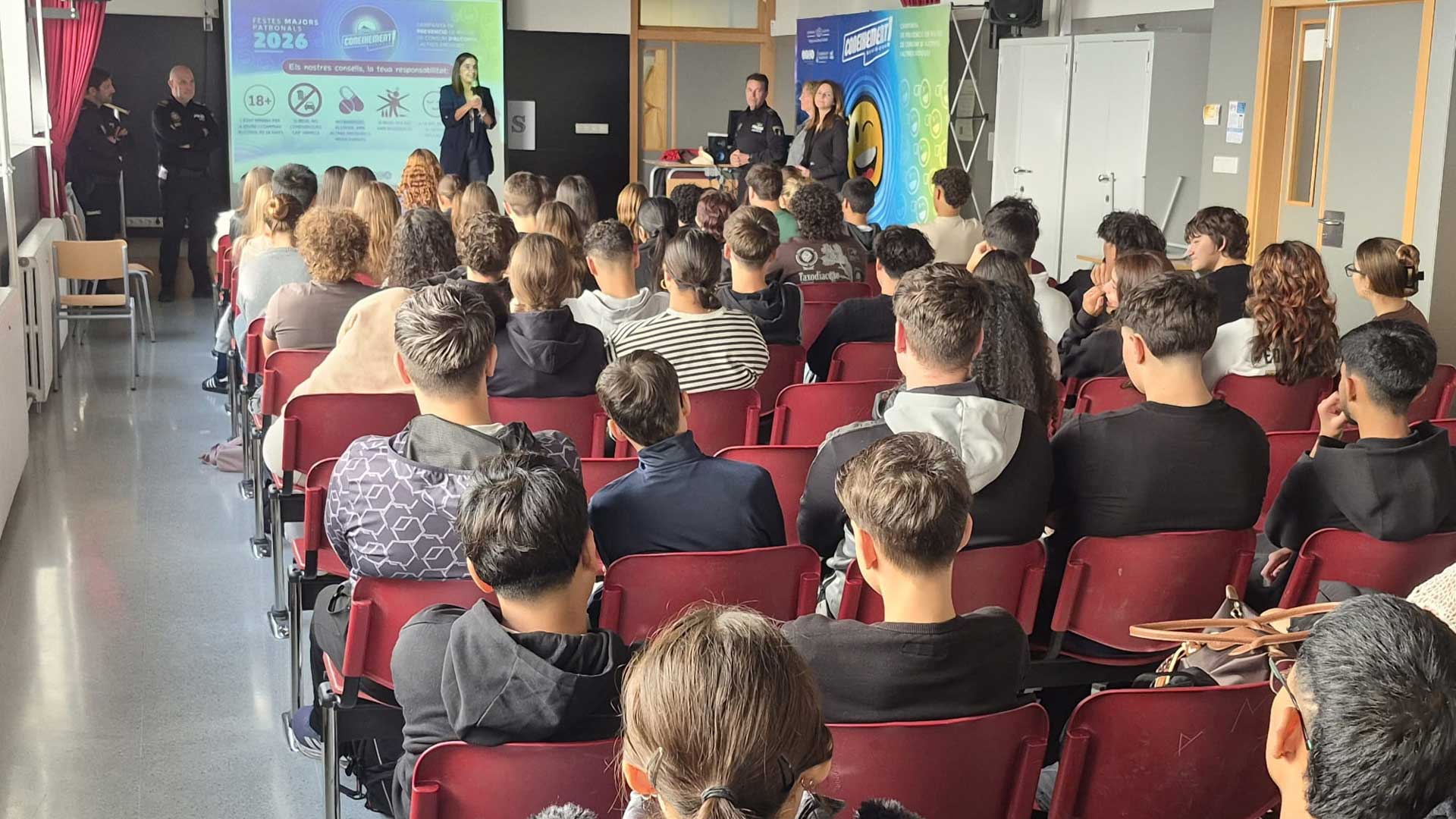
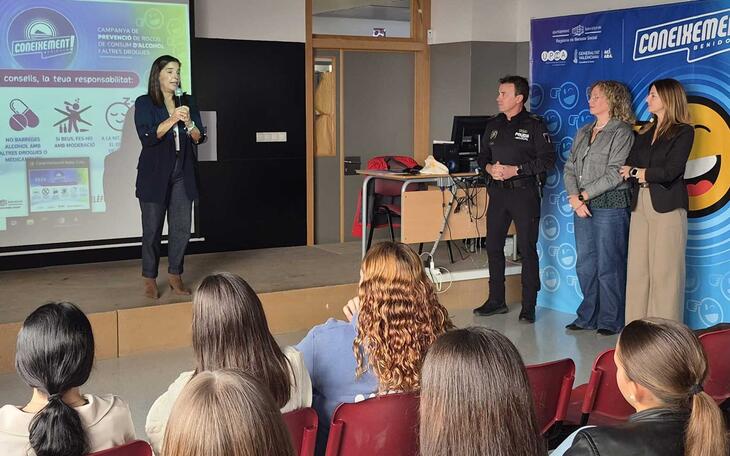
As part of the campaign, the National Police and Benidorm Local Police have jointly organised a series of informative talks at schools across the municipality. The sessions are aimed at students in secondary education, sixth-form and vocational training courses, and have reached more than 1,000 students. The campaign visited IES Bernat de Sarrià this morning.
These activities form part of the Master Plan for Coexistence and Improving Security in Schools and their Surrounding Areas, regulated by Instruction 6/2023 of the Secretary of State for Security.
The main aim of the sessions is to provide young people with “reliable information and practical tools to help them identify risky situations, understand the consequences of substance use and make responsible decisions, particularly in festive settings”, Zaragozí stressed.
During the talks, National Police officers addressed the legal consequences of consuming and possessing illegal drugs, as well as administrative offences covered by Organic Law 4/2015 on the Protection of Public Security and offences against public health. Students were also informed about their rights and obligations in the event of police identity checks and searches, as well as the regulations governing the possession of dangerous objects.
For its part, Benidorm Local Police focused on regulations concerning the consumption and supply of alcoholic drinks to minors, the consequences of driving under the influence of alcohol and other substances, and municipal rules governing the organisation and running of the festivities.
The talks also covered the obligations and responsibilities associated with membership of the local peñas (festive groups), with particular attention to compliance with regulations and preventing situations that could jeopardise safety and peaceful coexistence.
Beyond providing legal information, these sessions also seek to encourage teenagers to reflect on the consequences of their decisions, raise awareness of potential risks and promote healthier alternatives.
In addition to the school-based activities, two posters containing recommendations for enjoying the festivities responsibly, preventing risks associated with alcohol and other drug use, and complying with current regulations will be distributed among Benidorm's peñas.
These materials aim to reinforce the shared responsibility of festive groups and the wider community in creating safer, healthier and more respectful environments during the celebrations.
Councillor for Social Welfare Ángela Zaragozí explained that “the campaign continues to focus on an accessible, participatory approach to prevention, tailored to the reality of the festivities and combining information, awareness-raising and the involvement of different social stakeholders”.
The councillor also announced that a Purple Point (Punto Violeta) will be set up in Plaza de SS MM Los Reyes de España every day throughout the festivities. In addition to its usual support services, it will offer a drink-spiking detection system to identify substances used in drug-facilitated sexual assault.
“With this new edition of the campaign, the City Council reaffirms its commitment to preventing addictive behaviours, protecting minors and promoting Festes Majors Patronals where enjoyment, respect and responsibility take centre stage”, Zaragozí concluded.