Benidorm presents the benefits of the local technological platform, already connected to the PID, to share data and develop tourism intelligence
Among the tools to be implemented are a smart parking system, a water-related alert module, and flow and occupancy monitoring in public spaces
Toni Pérez: “Public policies must make cities attractive, and data is what enables us to make decisions that help the city function better.”
The ‘Benidorm Integra con la PID’ project is funded with €3.1 million in European funding from the Recovery, Transformation and Resilience Plan
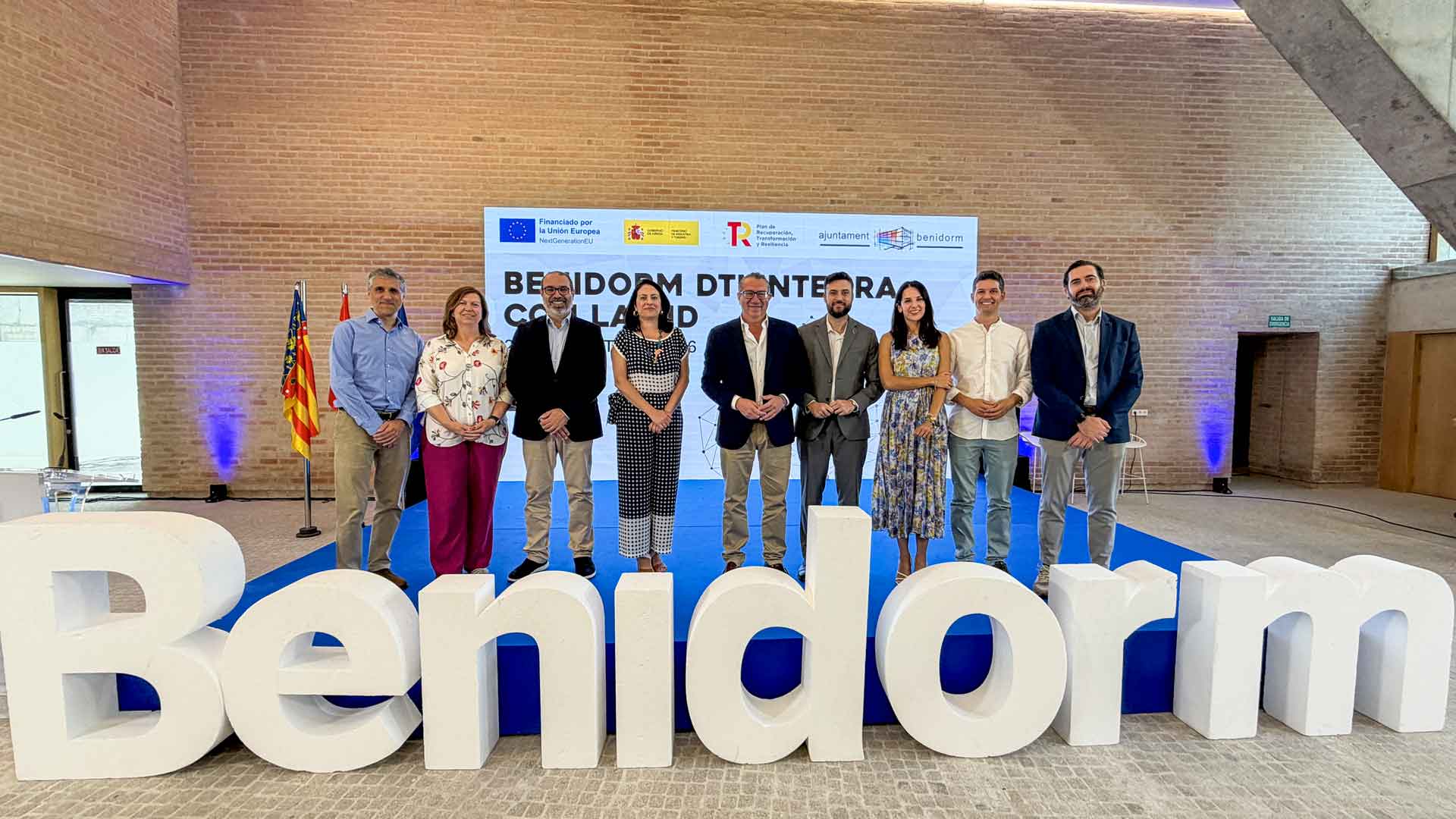
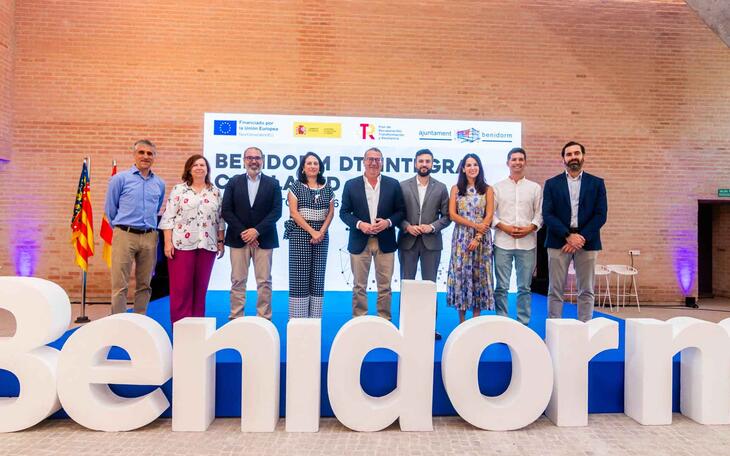
Benidorm City Council presented this morning, in the foyer of the Cultural Centre, the new tourism technology platform, which is connected to the Intelligent Destination Platform (PID), promoted by the Spanish Secretary of State for Tourism and managed by Segittur. The platform has been developed as part of the ‘Benidorm DTI Integra con la PID’ project, one of the most ambitious initiatives undertaken by Benidorm in the field of digital transformation in tourism. Its implementation is aligned with the City Council’s tourism strategy, which focuses on continuing to advance towards a more innovative, sustainable and intelligent destination model.
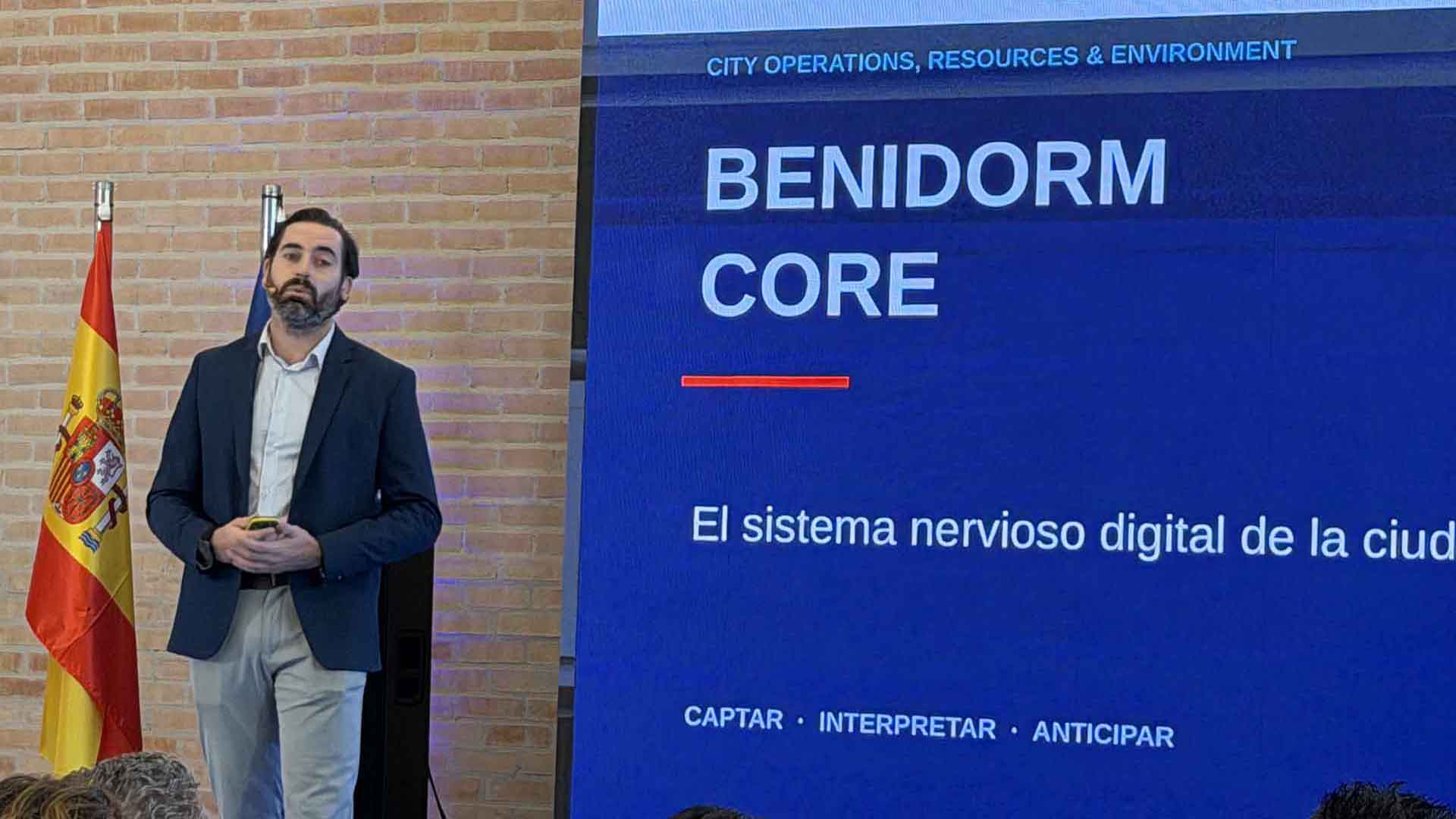
The event began with a presentation of the project’s features and applications, focusing on the benefits it brings to the local tourism ecosystem, visitors and public administrations. The presentation was delivered by Antonio Sánchez, Tourism Promotion and Marketing Officer at Visit Benidorm, and Jorge San Martín, Technical Product Manager at NEC Ibérica, the company responsible for implementing the project. They also presented several use cases.
Sánchez emphasised that the interaction between the platforms “allows us to improve our promotion, make it more targeted, and decide what we communicate, to whom, how, when and through which channels”. San Martín, for his part, focused on two key aspects of the portal: “location intelligence, which is a public geographic information portal where the City Council has registered and updates its main assets” and, secondly, “interaction and engagement, an intelligent way of getting to know visitors and personalising their relationship with the destination”. “This makes it possible to carry out more targeted and personalised campaigns based on the visitor’s profile,” he concluded.
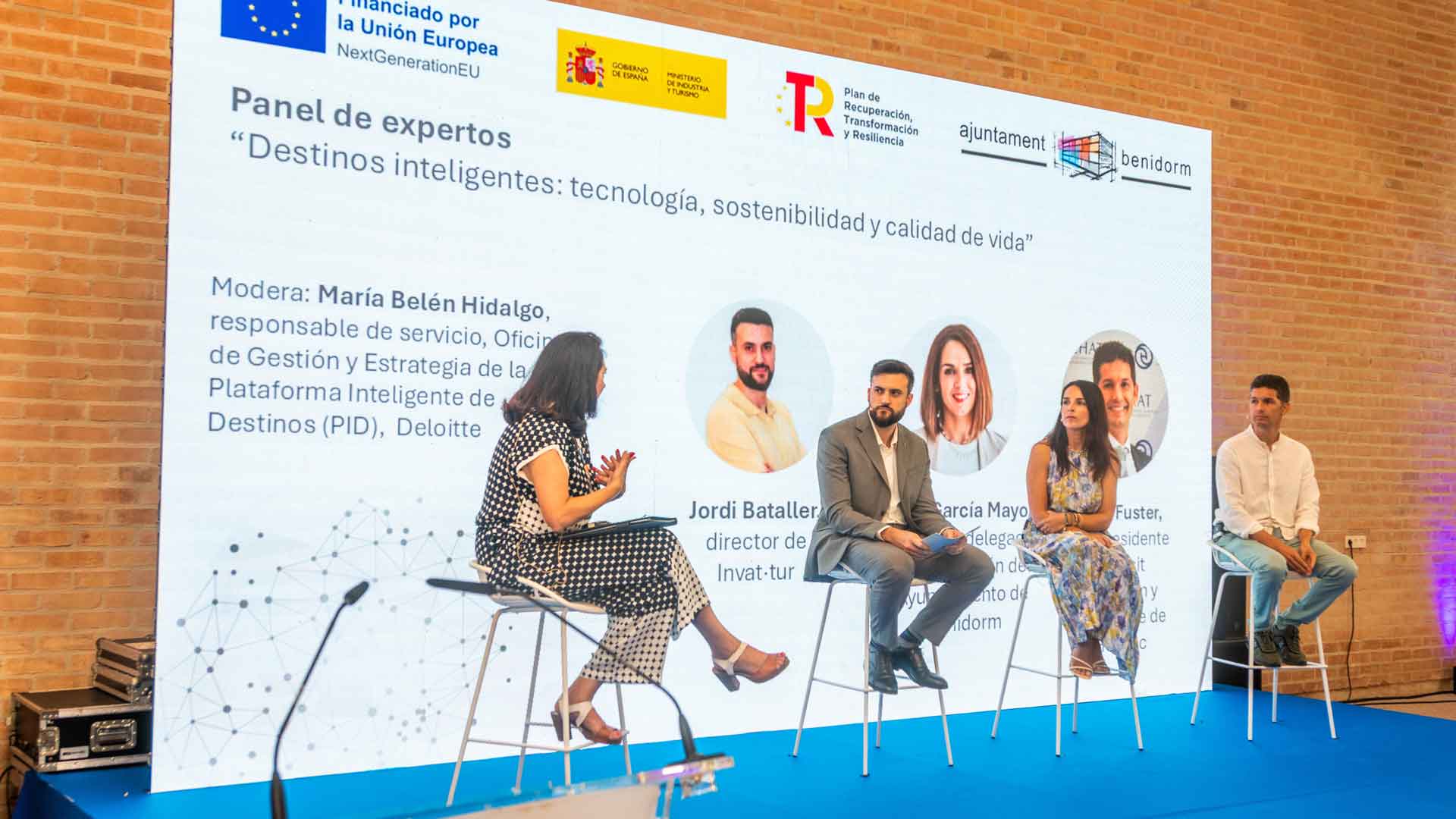
The event continued with a panel of experts discussing the current state of smart destinations, focusing on technology, sustainability and quality of life. The panel featured Aida García Mayor, Benidorm’s Councillor for Innovation; Jordi Bataller, Director of Tourism Intelligence and Innovation at Turisme Comunitat Valenciana; and Fede Fuster, President of Hosbec and Vice President of Visit Benidorm. The panel was moderated by Belén Hidalgo, from Deloitte, the project’s technical office.
García Mayor highlighted that the PID will enable Benidorm to “have access to a wealth of information that will be transformed into knowledge for decision-making and will become a municipal management tool”. In this regard, the Councillor for Innovation explained that it will make it possible to “move from a reactive management model to a predictive, anticipatory one”. She also stressed that the PID “is only the starting point, and that success will be measured by whether there has been a real change in management in the coming years”. She further emphasised the importance of residents’ perceptions regarding many aspects of the city, “which we will now be able to understand much better”, and expressed her hope that by 2030 “there will have been a real transformation, that data will have become a management infrastructure for the destination, and that citizens will have the perception that their city functions better”.
Jordi Bataller, for his part, stressed that “technology is useful when there is an integrated destination management model, although Benidorm has already come a long way”. In this regard, he predicted that “the territories that are best prepared will be the ones that make the most of everything the PID will have to offer”. He concluded by stating that “anticipating potential problems will lead to better decisions”. “If this is achieved, the PID will be a success,” he concluded.
Fede Fuster believes that the PID “will substantially increase efficiency and reduce subjectivity” and stated that “data has value when it is shared”. The President of Hosbec described the platform as “a major motorway onto which more and more traffic will continue to merge”.
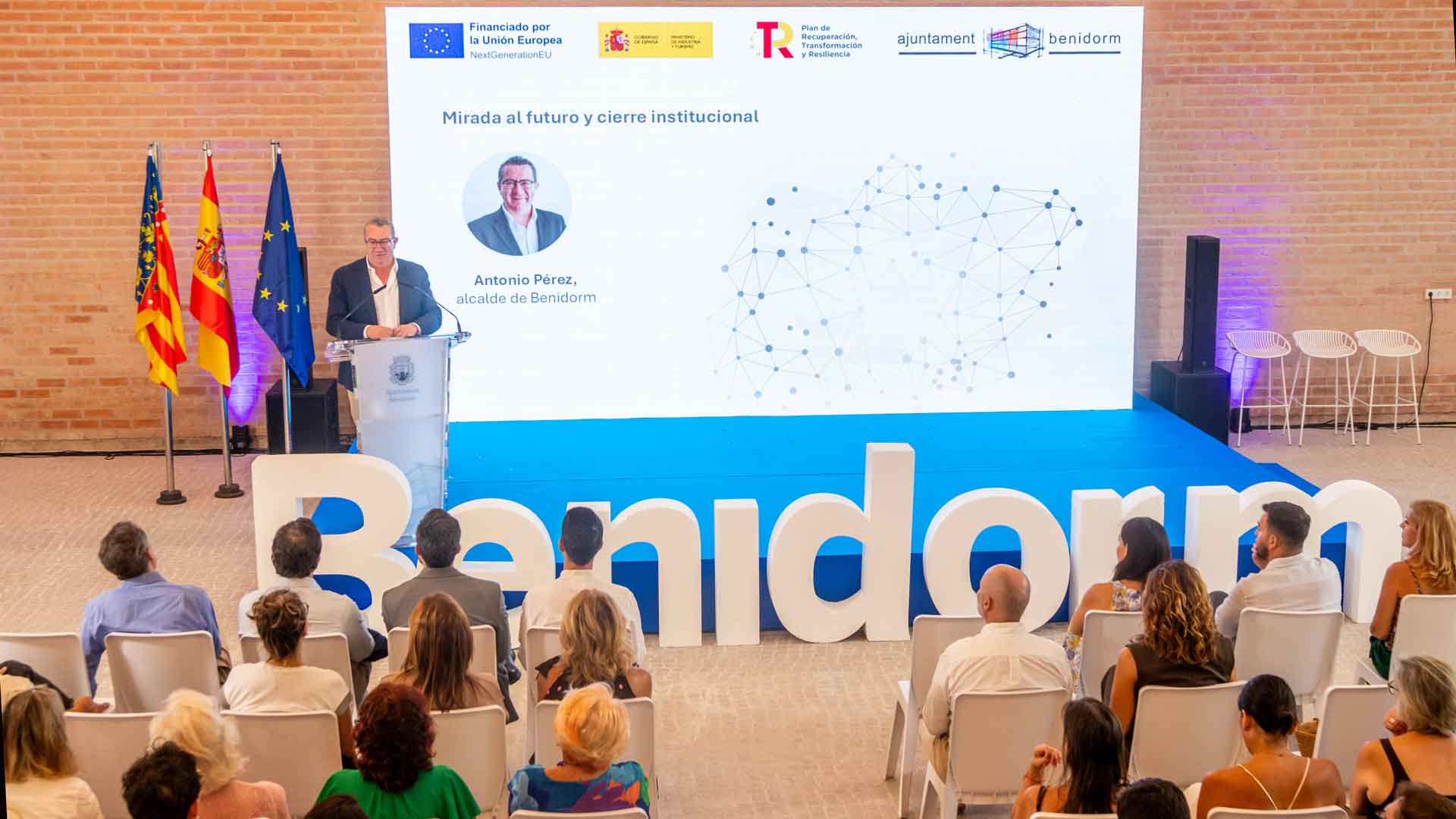
The presentation was brought to a close by Benidorm Mayor Toni Pérez, who repeatedly highlighted the value of data and the PID in decision-making by an administration “that puts people at the heart of its actions”. “The city is the destination, but what makes the difference is breaking records for Social Security registrations, having an unemployment rate below double digits, etc., and that is what motivates us to keep moving forward,” he said. Pérez cited the Benidorm Half as an example of how data can be used, noting that in 2014 it had 2,200 participants. “Thanks to a study, we gave it a 180-degree turnaround, and in 2025 there were 9,132 runners, 4,600 of whom were international. This does not happen by chance; it happens by analysing data. Data can be used to change the narrative,” he explained.
Another example of how the use of information can improve the city’s results is the spending recorded in 2025 through credit and debit cards. “It amounted to €41 million. In the first six months of this year alone, we have already reached €50 million,” the mayor reported. “Public policies must make cities attractive, and data helps the city function better,” he added. Pérez nevertheless recalled that “this did not start today; everything we have done is what has brought us to where we are”. He also expressed his confidence that the PID “will enable us to manage public affairs better, develop better policies and share data, but it will be people’s decisions that connect us with the future. That is why we hope that public policies will be as well-targeted as possible.”
With the deployment of this project, Benidorm now has a platform featuring integrated information and personalised services that generates value at three levels. First, for visitors, by providing a unified destination portal that will enhance the tourism experience before, during and after their stay. Second, for the local tourism sector, which, through access to advanced, real-time, data-driven tourism intelligence, can adapt its offering, improve competitiveness and anticipate demand trends. And finally, for destination management itself, as it enables effective interoperability with the national PID, evidence-based decision-making, and stronger sustainability and efficiency in the management of tourist flows.
Among the solutions implemented, in addition to the creation of this unified destination portal, is a location intelligence module designed to integrate, analyse and display geospatial data from different sources on maps, enabling intelligent analysis of tourism impacts. The project also includes a loyalty module, as well as a water resources and alerts module for monitoring the status of water bodies and managing water resources, with particular attention to drought or water scarcity events, floods, heatwaves and cold spells, and environmental indicators.
In addition, an intelligent parking system has been developed through the installation of sensors and cameras. The system will identify, in real time, the status of parking spaces for people with reduced mobility (PRM) and the city’s park-and-ride facilities. This tool will optimise parking availability and make it easier for users to locate available spaces.
Finally, a visitor capacity and flow monitoring system is also being implemented to monitor and control, in real time, occupancy levels across different areas of the destination. This will optimise the management of public spaces and improve the visitor experience. At the same time, the project includes the creation of multimedia content to promote and showcase Benidorm’s tourism, cultural and heritage assets, as well as its accessibility and visitor experiences.
European funding
The ‘Benidorm DTI Integra con la PID’ project, with a budget of €3.1 million, is part of the Spanish Secretary of State for Tourism’s call for grants to support the deployment of technological platforms in destinations belonging to the Smart Tourism Destinations (DTI) Network, under the Recovery, Transformation and Resilience Plan (PRTR), funded by the European Union – NextGenerationEU.
The initiative integrates the local smart platform developed by the City Council with the Intelligent Destinations Platform (PID) of the Spanish Secretary of State for Tourism, further consolidating Benidorm—the world’s first certified Smart Tourism Destination in 2018—as a benchmark for the digital transformation of the tourism sector.