The City Council's solution aims to diversify water sources to reduce vulnerability to periods of drought
Benidorm and Veolia secure a grant for a project that will guarantee water supply in the face of climate change
Benidorm City Council and Veolia, the concessionaire for the Integrated Water Cycle, have each secured a grant of €60,000 from European funds for the development of the CAESAR project (Climate Adaptation and Economic Solutions for Adaptive Resilience), which falls under the prestigious Horizon Europe program.
For this project, the City Council and Veolia submitted a proposal as part of a consortium—led by the Basque Centre for Climate Change—along with twenty other European public and private entities, to apply methodological frameworks to nine specific case studies. This consortium aims to design innovative financial mechanisms to attract private investment in climate adaptation strategies.
The CAESAR project has a planned duration of 36 months and a total budget of three million euros. The City Council and Veolia have each been allocated €60,000 to carry out their technical activities within the consortium.
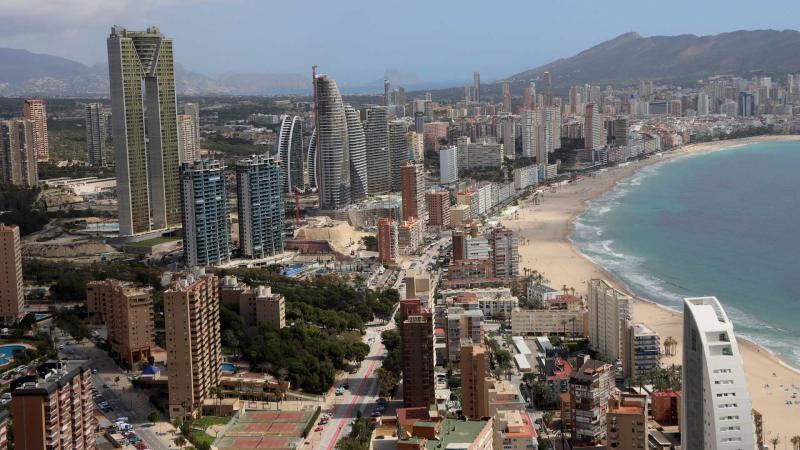
José Ramón González de Zárate, Councillor for the Water Cycle, described Benidorm's participation in this program as "key," explaining that "we are the main actor in Case Study 2, whose challenge is to ensure a resilient water supply in the face of the threat of climate change." As a consequence of Benidorm's semi-arid Mediterranean climate, the city faces severe water scarcity, rising temperatures, and prolonged droughts, compounded by the pressure of a tourism model that swells the population from 70,000 to nearly 400,000 at certain times of the year.
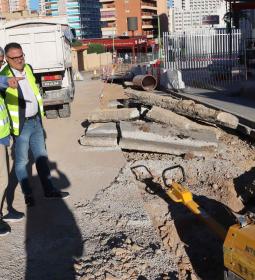
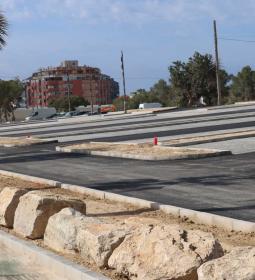
González de Zárate pointed out that to address this challenge, the adaptation solution led by the City Council consists of "establishing advanced reclaimed water infrastructure." The objective, he emphasised, is "to diversify the city's water sources and guarantee continuous access to high-quality water, drastically reducing the municipality's vulnerability to periods of drought."
The main objective of the CAESAR project is to overcome the public funding gap and demonstrate that climate adaptation is also a shared and profitable investment opportunity. “That is why the Benidorm model stands out for its financial innovation through public-private partnerships,” said the councillor, who believes that through this innovative mechanism, “it is estimated that some 7.2 million euros of private investment can be mobilised for the deployment of these water infrastructures in the city.”
Another objective of the Benidorm case study is for the city to act as a ‘demonstration site’ at the European level. “We hope that the water regeneration technologies and the public-private financing frameworks developed over these 36 months will serve as a replicable and scalable model for other coastal cities and tourist destinations in the Mediterranean facing similar problems,” explained González de Zárate.
The CAESAR project will not only implement the technical infrastructure but will also promote ‘Climate Resilience Dialogues’ to redesign how risks and responsibilities are shared between the administration, private actors and civil society, “which consolidates Benidorm’s leadership in tourism sustainability and climate resilience,” the councillor concluded.