
Benidorm expands its ethnological heritage with 300 traditional woodworking and boat caulking tools
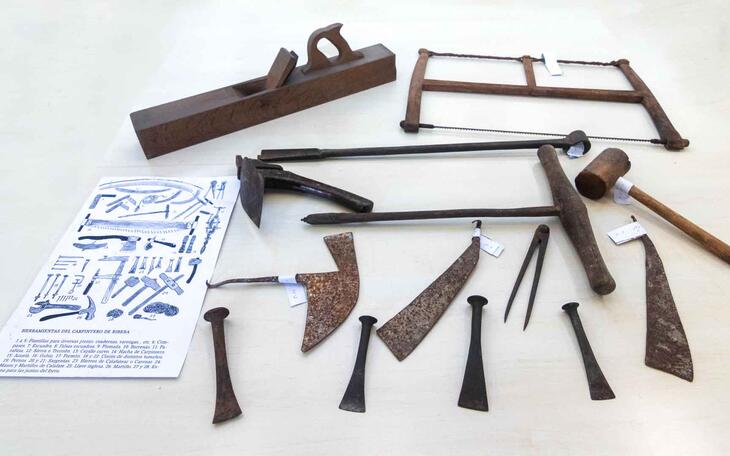
The donation by Jaime Climent also includes more than a hundred photographs from the 1950s and 1960s, as well as fishing rods and fossils found in the city and surrounding areas
Benidorm City Council is set to expand its ethnological heritage collection by adding “more than 300 traditional woodworking and boat caulking tools” donated by Jaime Climent. This was announced today by Councillor for Historical Heritage Ana Pellicer, who explained that the donation “also includes more than 150 photographs from the 1950s and 1960s taken by the donor’s father, a keen photography enthusiast; around ten traditional fishing rods; as well as fossils found within the municipality of Benidorm and in neighbouring areas of the Marina Baixa region”.
Pellicer highlighted that “this is a very interesting collection of ethnological, palaeontological and photographic items, linked to the history, traditions and collective memory of Benidorm and the Marina Baixa region”.
Regarding the tools, the councillor explained that they are “implements traditionally used for the construction, repair and maintenance of wooden boats, as well as for carpentry work. They provide tangible evidence of traditional trades linked to Benidorm’s seafaring heritage, while highlighting the town’s historical connection with fishing and maritime activities”.
In addition to the items included in this donation, Jaime Climent had previously donated a bass drum belonging to Grupo Iris, a musical group made up of local musicians which took part in festivities and events in Benidorm and other municipalities during the 1950s.
Pellicer thanked Jaime Climent for “his generosity in ensuring that this part of his family heritage becomes part of the heritage of all Benidorm residents, while also helping to further document traditional trades that have now disappeared from our city but which, for centuries, formed part of everyday life in Benidorm”.
She also expressed “the City Council’s gratitude” for “the trust that the donor and his family have placed in the local administration to preserve heritage that holds great sentimental value for them and, in turn, great documentary value for the city”.
“Without a doubt, this trust is the result of the work carried out by the Municipal Archive to preserve and showcase all the heritage that Benidorm residents have donated over the years, helping to enrich the city’s municipal heritage,” she concluded.